Services

Design review for capacity enhancement

A design review for capacity enhancement establishes what actually limits an existing crude oil treatment train or hydrogen purification unit, and which changes remove that limit at least cost. Axsia Howmar compares current and future duty with the original design basis, tests each possible limit by calculation, and ranks the revamp options.

The one constraint that caps throughput today, and the two behind it
The binding limit
Then internals within the existing shells, then new equipment
Operating changes first
Each with its capacity gain, shutdown requirement and order of cost
Ranked options

Send a technical enquiry

Where trains run out of capacity

The limits we test first

Every unit has one binding limit and several that are close behind it. The review tests each by calculation against current and future duty, so that money goes on the limit that actually caps throughput.

  • Heater duty

    Rising water cut takes more heat to reach treating temperature.

  • Grid loading and settling time

    Throughput against the coalescer's electrical and hydraulic design.

  • Water handling and interface

    The vessel's lower section and its interface measurement.

  • Adsorbent capacity

    PSA bed capacity for the controlling impurity, and gas velocity during depressurisation.

  • Valve capacity and stroke time

    Whether the switching valves and tail gas system can follow a faster cycle.

  • Condition

    Inspection findings and vessel fatigue life, kept separate from capacity limits.

Reuse first

Reuse the vessel where it is sound

Options are developed in order of cost: operating changes first, then internals and components within the existing shells, then new equipment. Upgraded grids and power units, a new inlet distributor or a second stage in an existing vessel often recover the capacity without a new vessel, and each option is reported with its gain, its shutdown requirement and its order of cost.

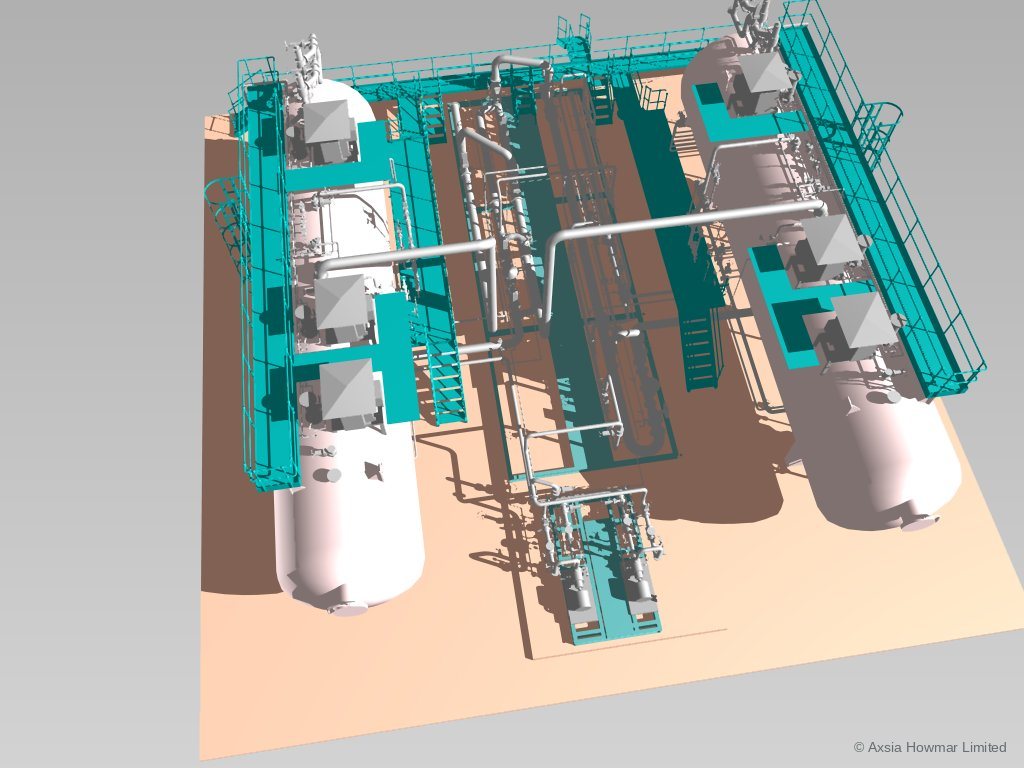
3D model of a two-stage desalter package. Adding a stage is one of the options a review ranks.

When a design review is the right first step

A design review is the right first step when throughput has to rise, when the crude slate or feed gas is changing, when water cut has moved beyond the original design, or when a unit has been pushed until its product quality has become unreliable. It costs little compared with a revamp, and it prevents the most expensive mistake in capacity projects: removing a limit that was not the binding one.

Typical limits in crude oil treatment trains

The typical limits in a crude oil treatment train are heater duty as water cut rises, grid loading and settling time in the electrostatic coalescer, the water handling capacity of the vessel’s lower section, inlet distribution in older vessels, transformer rating, and interface measurement that cannot cope with a thicker emulsion band. Revamp options for each are described under electrostatic coalescers and crude oil heaters.

Typical limits in hydrogen PSA units

The typical limits in a hydrogen PSA unit are adsorbent capacity for the controlling impurity, upward gas velocity during depressurisation, switching valve capacity and stroke time, the tail gas system, and the remaining fatigue life of the vessels. See PSA hydrogen purification.
How we approach Design review for capacity enhancement

  1. Define the target

    The throughput, feed and product specification you need, now and over the planning period, including crude slate or feed gas changes.

  2. Reconstruct the design basis

    From datasheets, drawings and nameplates. For legacy units without documents, from measurement and inspection.

  3. Test each limit

    Hydraulics, heat duty, grid loading, settling time and water handling for crude units; bed capacity, velocities, valve capacity, cycle and tail gas system for PSA units.

  4. Develop options

    Operating changes first, then internals and components within the existing shells, then new equipment.

  5. Rank and report

    Each option with its capacity gain, what it depends on, its shutdown requirement and its order of cost.

Deliverables from Design review for capacity enhancement

  • Capacity assessment: The binding limit and the next two behind it, with calculations
  • Option list: Ranked by gain, cost order and shutdown need
  • Scope definition for the selected option: Enough for budgeting and for a purchase requisition
  • Revised operating window: Settings for the re-rated duty

Data we need from you for Design review for capacity enhancement

Data we need from you for Design review for capacity enhancement
Data itemWhy it is needed
Original datasheets, drawings and performance guaranteesReconstructs the design basis
Current operating data and laboratory resultsShows where the unit runs today relative to that basis
Future cases: rates, crude slate or feed composition, specificationsDefines the target
Inspection reports and known defectsSeparates capacity limits from condition problems
Constraints: plot space, utilities, shutdown datesFilters the options

Partial data is normal. Send what you have and we will tell you what else matters.

Typical outcomes of Design review for capacity enhancement

  • A clear statement of how much more the existing equipment can do, and what stops it (Subject to the condition of internals confirmed at inspection)
  • Revamp options that reuse existing vessels where that is sound
  • Avoidance of spending on a limit that is not the binding one

Outcomes depend on the condition of the equipment, the feed and the operating envelope. Nothing on this page is a performance guarantee.

Frequently asked questions: Design review for capacity enhancement

How much extra capacity can an existing desalter give?

How much more an existing desalter can treat depends on which limit is binding: grid loading, settling time at the treating viscosity, water handling, transformer capacity or the heater upstream. Some units have margin that operating changes release. Others need new internals. The review quantifies it for your vessel and your crude.

Can a PSA unit be debottlenecked without adding vessels?

A hydrogen PSA unit can often be debottlenecked without new vessels by re-optimising the cycle, changing to an adsorbent loading matched to the current feed, replacing valves that limit step times, and lowering tail gas pressure. Vessel velocity limits and fatigue life set the ceiling, and the review checks both.

What is the difference between troubleshooting and a design review?

Troubleshooting asks why a unit no longer does what it used to do. A design review asks whether a unit can do more than it was designed to do. In practice they overlap, because a unit running beyond its design basis shows the same symptoms as one with a fault, and the first task is to tell them apart.

Will a capacity increase need a long shutdown?

Not necessarily. Operating changes need none. Replacing grids, bushings, insulators, distributors, adsorbent or valves is normally planned into a turnaround of normal length, with parts ordered ahead. Only options that add vessels or major piping need more. Each option in the report states its shutdown requirement.

Talk to an engineer about your unit

Tell us the equipment, the duty and what you are seeing. Partial data is normal: send what you have and we will tell you what else matters. We acknowledge every enquiry within 1 working day.