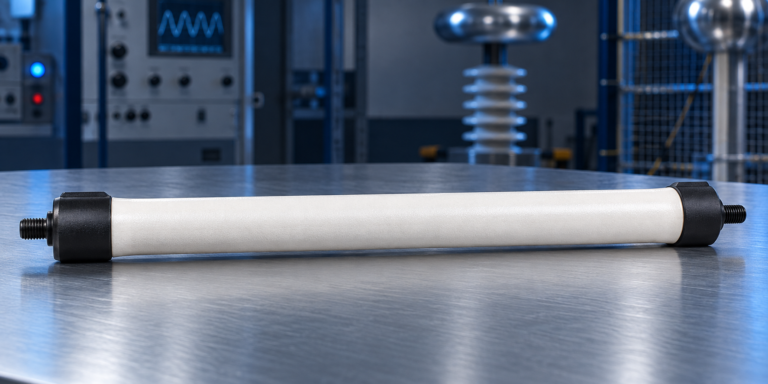
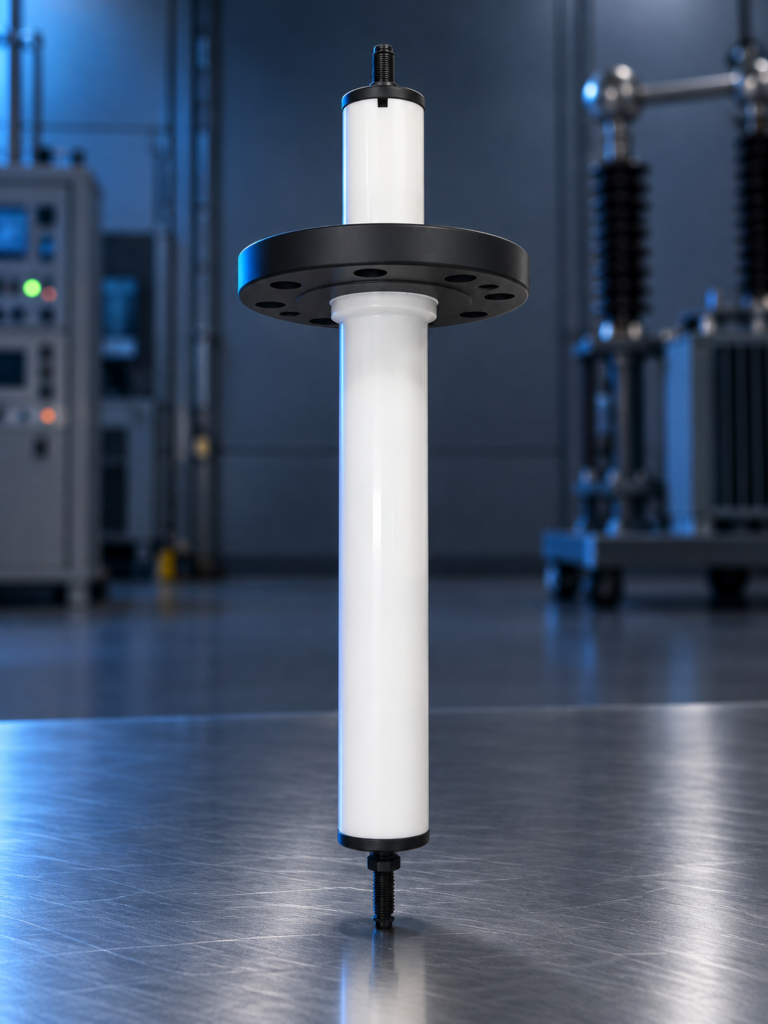
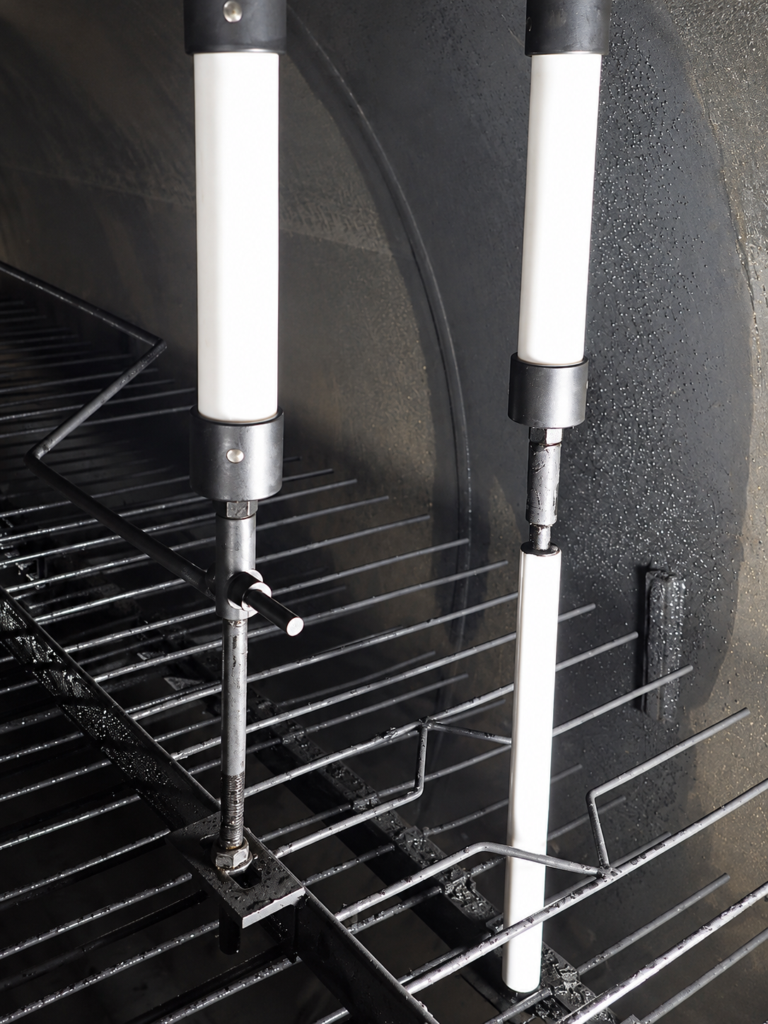
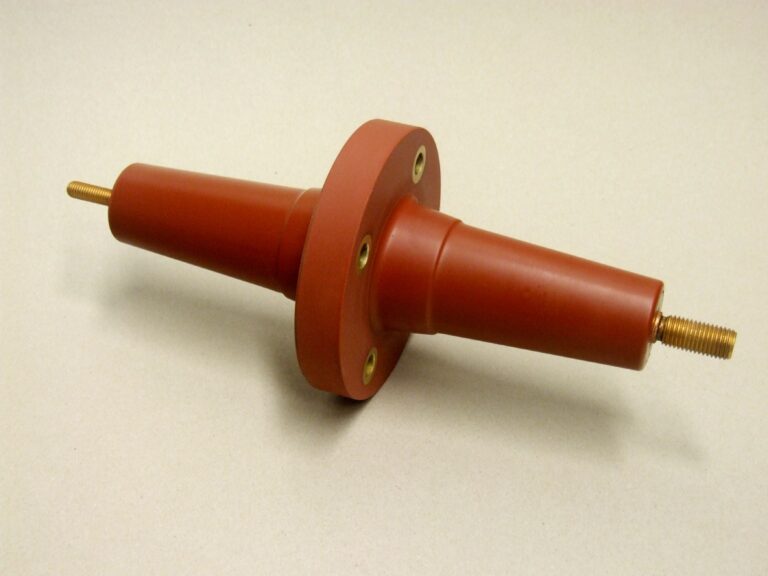
Suspends an energised electrode grid from the vessel structure inside a desalter, dehydrator or prewash coalescer and isolates it electrically from earth. Insulators work immersed in hot crude and must resist surface tracking as well as carry the weight of the grid.
For electrostatic coalescers in desalter and dehydrator duty, and for the electrostatic prewash coalescers and precipitators of kerosene sweetening units. Length, end fittings and load rating are matched to the existing hanger arrangement from a drawing, a sample or site measurement.
Specification: Electrode insulator
Specification: Electrode insulator
Property
Value
Rated voltage
40kV AC/DC
Overall length (Top Grid)
380mm14.961in
Overall length (Middle Grid)
670mm26.378in
Overall length (Lower Grid)
995mm39.173in
Standards and documentation: Electrode insulator
Documentation available with supply
Certificate of conformity
High-voltage / dielectric test certificate
Dimensional inspection report
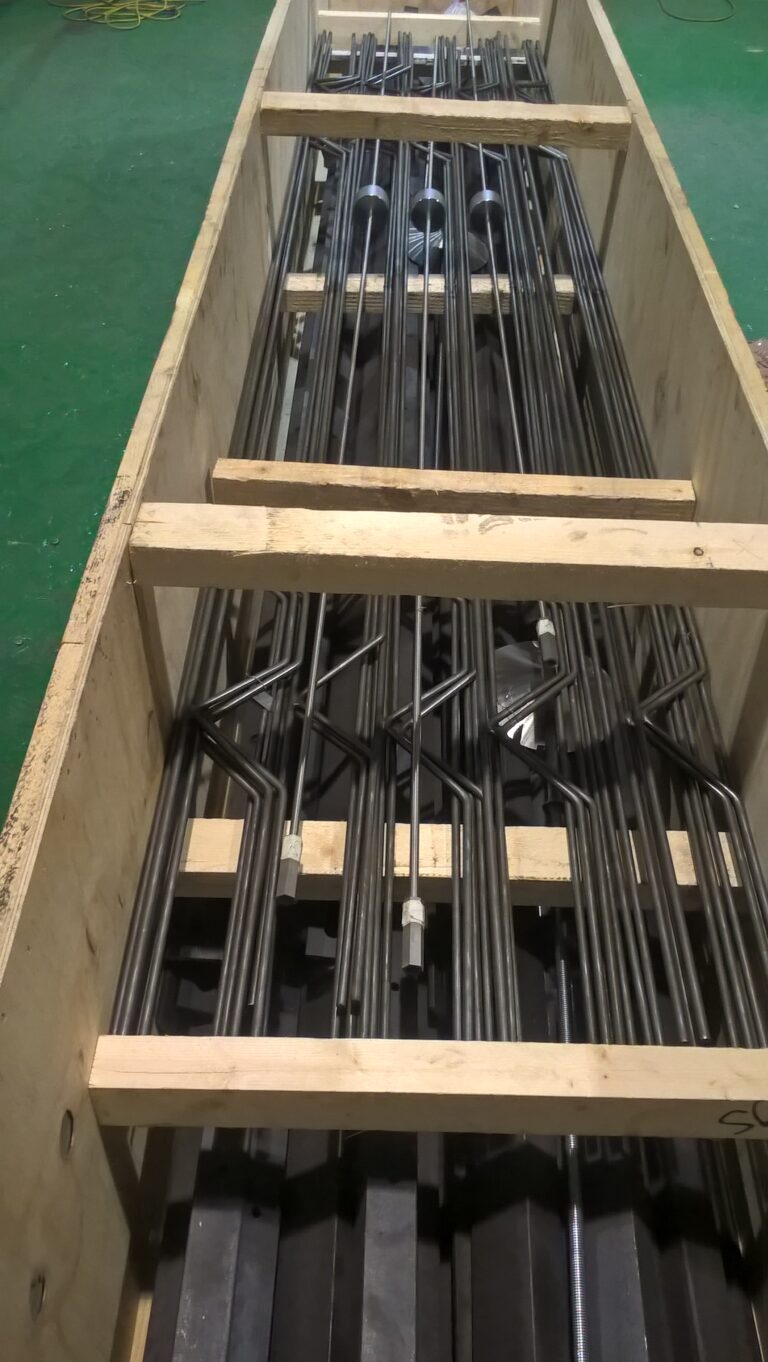
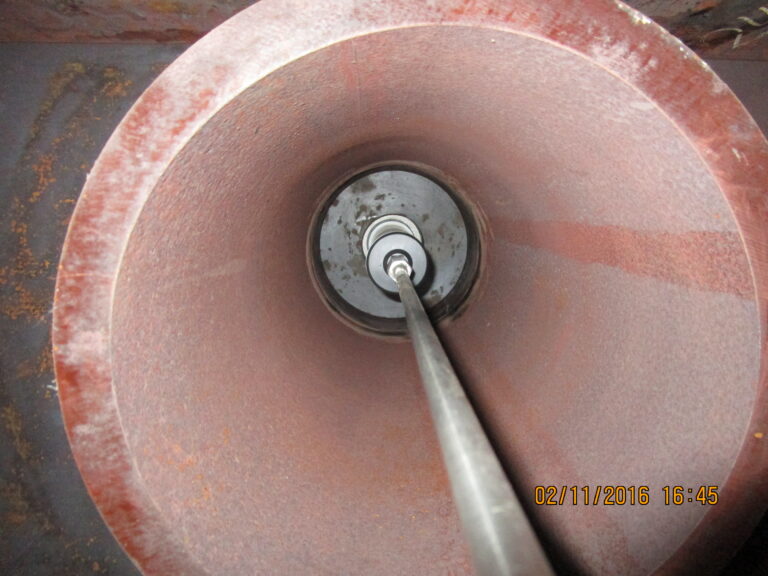
Images: Electrode insulator
Information on this page is indicative. Final suitability and compatibility must be confirmed against your equipment, its serial or tag data and its operating conditions before order. Lead-time bands are indicative and are confirmed at quotation.
When to replace electrode insulators
Electrode insulators are inspected at every vessel entry and replaced when they show surface tracking, cracks, swelling or deposits that cannot be cleaned off. Replacing a full set at a planned shutdown costs little compared with an unplanned outage caused by a single tracked insulator.
An electrostatic coalescer is a pressure vessel that uses a high-voltage electric field to merge small water droplets in crude oil into drops large enough to…
An electrostatic coalescer prewash removes entrained caustic from kerosene after the caustic prewash of a kerosene sweetening unit. A high-voltage direct current (DC) field makes the…
A crude oil dehydrator is an electrostatic coalescer used to remove produced water from crude so that it meets its basic sediment and water (BS&W) specification.…
A crude oil desalter removes salt from crude by mixing in low-salinity wash water to dilute the brine, then removing the water in an electrostatic coalescer.…
A crude oil treatment system removes water, salt and sediment so that crude meets its sales or refinery specification. It works as a train: separation, heating,…
Troubleshooting a desalter, dehydrator or hydrogen pressure swing adsorption (PSA) unit starts with the symptom, because each symptom has a short list of probable causes and…
Process and detailed design turns a requirement, often no more than a datasheet, into a complete package that a fabricator can build and an operator can…
A design review for capacity enhancement establishes what actually limits an existing crude oil treatment train or hydrogen purification unit, and which changes remove that limit…
Carries the high-voltage conductor from the transformer or power unit through the pressure boundary of a desalter, dehydrator or prewash coalescer vessel to the…
Forms the energised and earthed electrodes between which the electric field is created inside a desalter or dehydrator. Water droplets passing through the field…
Connects the conductor of the entrance bushing to the energised electrode grid inside a desalter or dehydrator, carrying the high-voltage supply through the oil…
Insulates the high-voltage conductor where it passes close to earthed metal, such as the vessel nozzle or internal supports, inside a desalter or dehydrator.…
Carries the high-voltage output of a desalter, dehydrator or prewash coalescer transformer or power unit out of the transformer tank and into the conduit…
Only have a nameplate photo, a tag number or a drawing reference?
That is enough to start. Send what you have for a desalter, dehydrator, electrostatic coalescer or hydrogen adsorption unit, whoever built it, and we will identify the equipment and the parts it needs. Final compatibility is always confirmed against your equipment data and operating conditions.
With your permission we use Google Analytics to count visits and see which pages are useful. It sets cookies. We never send it your name, email address, files or anything you type into a form. The site works the same either way. Cookie policy