Spare parts and lifecycle support

Legacy equipment spare parts

If you operate an older desalter, dehydrator or electrostatic prewash coalescer and can no longer get parts for it, send us what you have: a nameplate photo, a tag number or a drawing reference. That is enough for an engineer to identify the equipment and tell you which parts we can supply, as new parts or as engineered equivalents.

Desalters, dehydrators, electrostatic coalescers and hydrogen adsorption units, whoever built them
Any make
Acknowledgement with a reference number, so follow-up information reaches the same engineer
1 working day
Every part is quoted with its condition, documentation and indicative lead time stated
New, refurbished or equivalent

Send a nameplate photo Search by an old part number

Identification

What to send so that we can identify legacy equipment

Any one of these is enough to start identifying legacy equipment. More is better, but do not wait until you have everything.

  • A nameplate photo

    The vessel nameplate, the transformer nameplate, or both. Manufacturer, year, serial number, design pressure and temperature tell us most of what we need.

  • A tag number and what the unit does

    For example the desalter tag and the crude unit it serves.

  • A drawing number or an old part number

    Even partial or hard to read. The part finder tolerates missing and mistyped characters.

  • A photo of the failed part

    With a tape measure or ruler in the picture, so that we have a dimension for scale.

  • The original datasheet or general arrangement drawing

    If one survives in your records. A scan or a phone photo of the title block is fine.

Files you upload are held in protected storage, are seen only by our engineers and are deleted after our retention period. Serial numbers, tag numbers and plant details are used only to identify your equipment. They are never published.

After you send it

What happens after you send a nameplate photo

  1. Acknowledgement within 1 working dayWith a reference number, so that follow-up information reaches the same engineer.
  2. IdentificationWe establish the equipment type, its internals arrangement and its electrical system from the nameplate data and our engineers' experience of designs of that period.
  3. Parts proposalA list of what we can supply, stating for each part whether it is new, refurbished or an engineered equivalent, with documentation and an indicative lead time.
  4. Confirmation before manufactureCritical dimensions are confirmed against your equipment, by your measurement or at a site survey, before anything is made.

Most requested

Equipment we are asked about most often

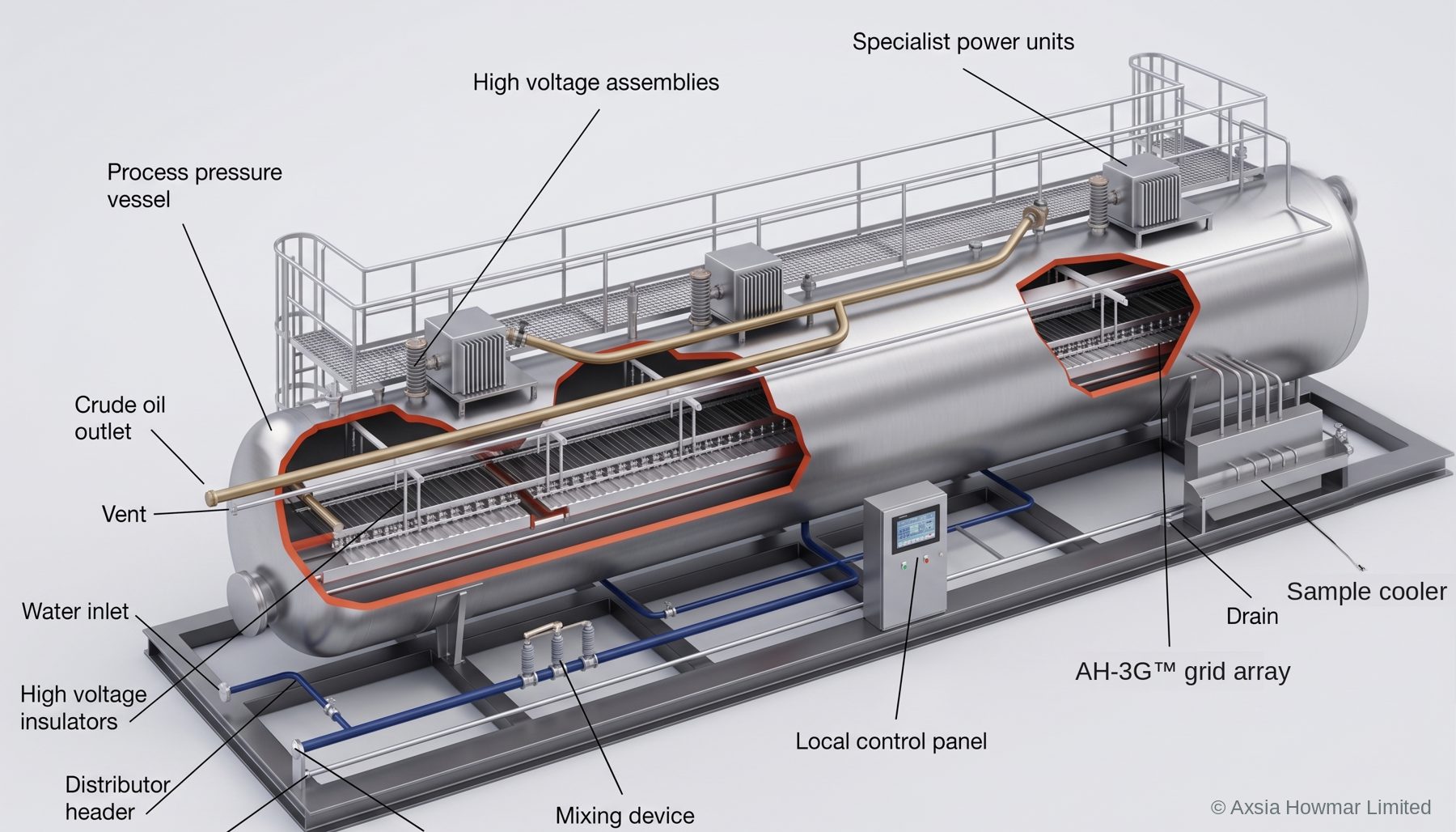
Most legacy enquiries concern the electrical system of an electrostatic vessel: the parts that carry high voltage through the shell and hold the grids. The cutaway shows where they sit.

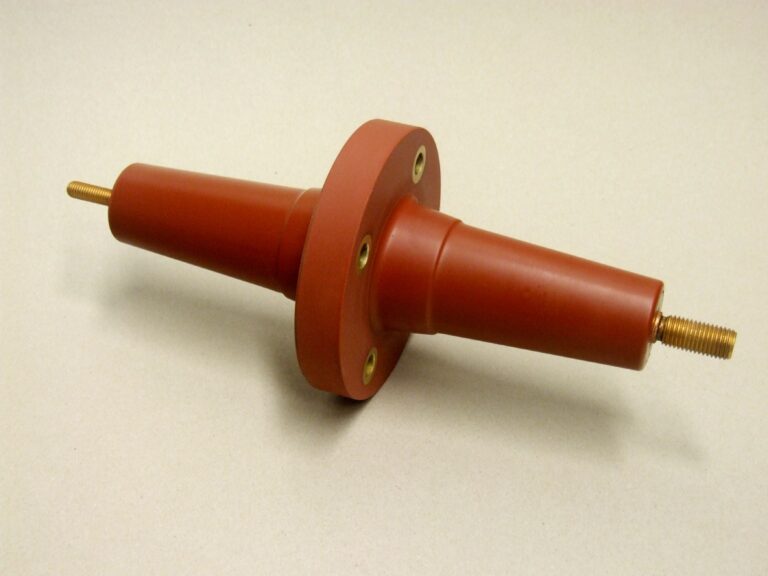
  • Electrostatic desalters and dehydrators of any make: entrance bushings, insulators, hangers, grids, connecting rods and transformer bushings.
  • Desalter transformers and power units: bushings and related parts, including parts suitable for use with Betra transformers. Betra is named only to identify compatibility; all trademarks belong to their respective owners.
  • Electrostatic prewash coalescers and precipitators on kerosene sweetening units: entrance bushings, electrode insulators, power units and power unit bushings.
  • Other process equipment our team supplied in earlier roles.

Electrostatic coalescer spare parts

Cutaway model of an electrostatic desalter. The power units, high-voltage assemblies, insulators and electrode grid array are the parts most often requested for older vessels.

Engineered equivalents

Engineered equivalents for parts that no longer exist

An engineered equivalent is a part designed to perform the same function and fit the same interfaces as an original that is no longer available. It is designed from measurement, drawings or a sample, to current materials and standards.

An engineered equivalent is not an original equipment manufacturer (OEM) part, and we say so on the quotation. Where a legacy design had a known weakness, the equivalent can correct it.

Beyond parts

When replacing parts is no longer the best answer

Sometimes a legacy unit needs more than parts. If the crude, the water cut or the throughput has moved well beyond the original design, new parts to the old design will keep failing. A design review shows whether upgraded internals in the existing vessel would solve the problem for good.

Only have a nameplate photo, a tag number or a drawing reference?

That is enough to start. Send what you have for a desalter, dehydrator, electrostatic coalescer or hydrogen adsorption unit, whoever built it, and we will identify the equipment and the parts it needs. Final compatibility is always confirmed against your equipment data and operating conditions.