
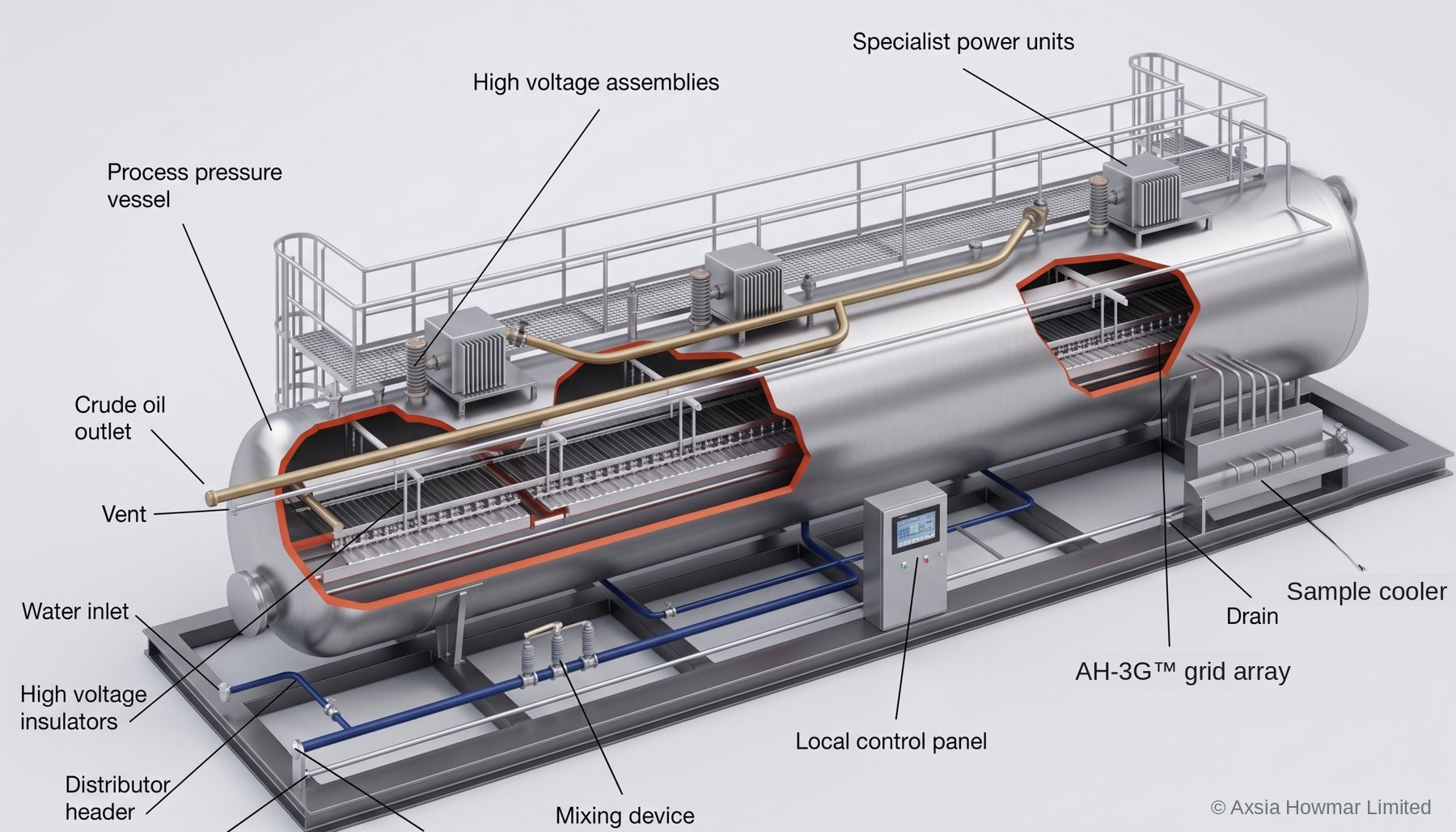
Parts most often replaced on desalters and dehydrators
| Part | What it does | Why it is replaced |
|---|---|---|
| High-pressure entrance bushing | Carries the high-voltage conductor through the vessel shell while insulating it from earth and holding vessel pressure | Electrical tracking or breakdown after water, deposits or heat reach the insulation; seal deterioration |
| Electrode insulator and hanger | Suspends the energised grid from the vessel and isolates it electrically | Surface fouling and carbon tracking; cracking; mechanical damage during maintenance |
| Grid assembly | Creates the electric field in which droplets coalesce | Corrosion, distortion after an upset, fouling that cannot be cleaned, or an upgrade to a different arrangement |
| Power connecting rod | Connects the entrance bushing conductor to the electrode grid inside the vessel | Corrosion, loosened or damaged connections, replacement together with a bushing |
| Insulating sleeve | Insulates the high-voltage conductor where it passes close to earthed metal | Tracking, swelling or embrittlement with temperature and hydrocarbon exposure |
| Desalter power unit | Oil-filled, hazardous-area transformer with 100 % reactance that energises the grid with an alternating current (AC) output selected on an off-load tap changer, typically 14, 16, 18, 20 or 22 kV | Winding or bushing failure, oil leaks, obsolescence, or a rating change when the grids or the crude change; made to order from the nameplate |
| Transformer bushing and power supply bushing | Carries the high-voltage output out of the transformer tank and into the conduit to the vessel | Oil leaks, insulation breakdown, damage; replacement during transformer overhaul |
| Injection quill | Places the demulsifier or wash water injection point in the centre of the line ahead of the mixing valve or vessel, so the additive disperses | Tip erosion or corrosion, cracking at the flange weld, blockage; poor mixing that shows first as a process problem |
| Local control panel spares | Voltage controller, indicating instruments, contactors, relays, fuses, lamps and switches that run and protect the power unit | Drift, obsolescence, repeated trips; components replaced to the panel schedule and hazardous area certificate |
| Gaskets and seals | Seal bushing flanges, manways and nozzles | Replaced at every opening; material matched to temperature and aromatics content |
Electrostatic coalescer parts in the catalogue
The parts below are listed in the open catalogue. Use the part finder to filter by category, or search by an old part number or drawing reference.
-
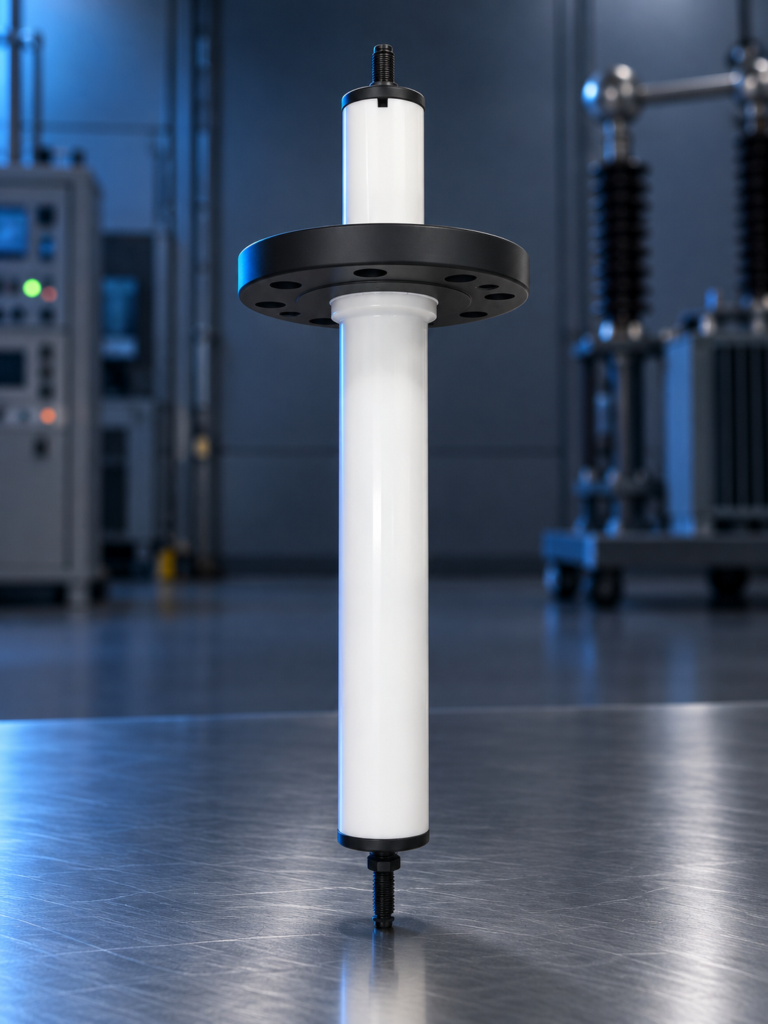
Bushings & insulators
Desalter entrance bushing
SKU AH-EC-1001
The desalter entrance bushing, also called the high-pressure entrance bushing, carries the high-voltage conductor from the transformer or power unit through the pressure boundary…
-
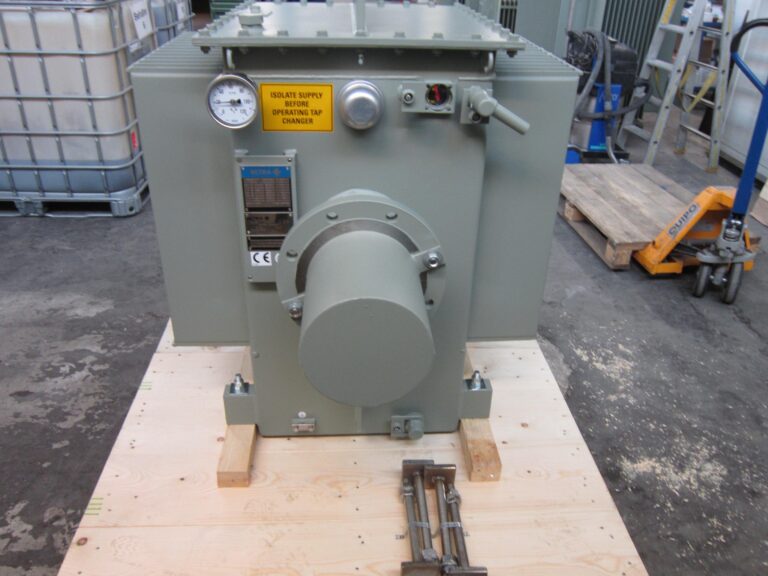
Transformers & power units
Desalter power unit
SKU AH-EC-1009
Energises the electrode grid of a crude oil desalter or dehydrator (electrostatic coalescer). The desalter power unit, also called the desalter transformer, is an…
-
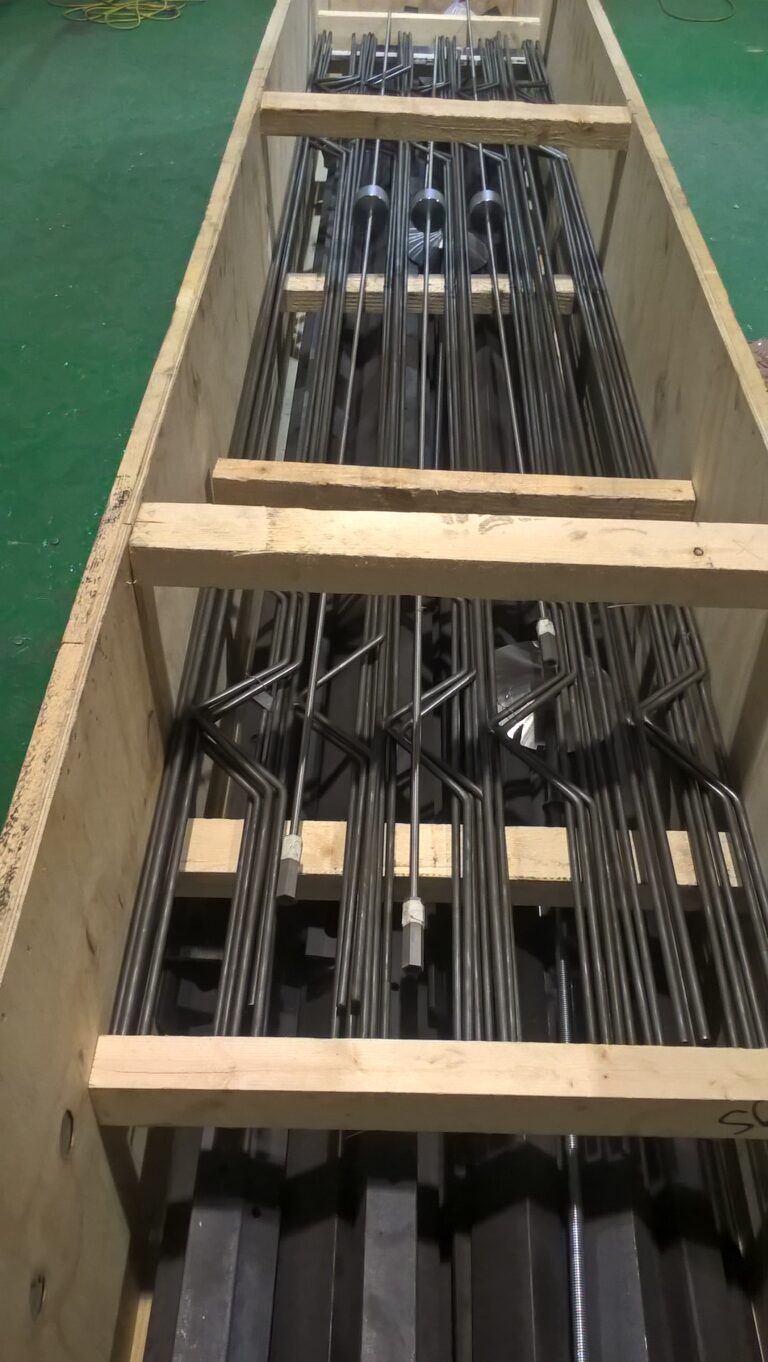
Electrodes & internals
Electrode grid assembly
SKU AH-EC-1003
Forms the energised and earthed electrodes between which the electric field is created inside a desalter or dehydrator. Water droplets passing through the field…
-
Bushings & insulators
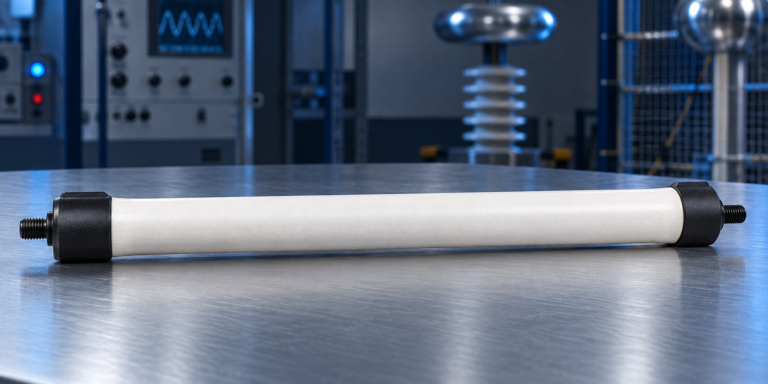
Electrode insulator
SKU AH-EC-1002
Suspends an energised electrode grid from the vessel structure inside a desalter, dehydrator or prewash coalescer and isolates it electrically from earth. Insulators work…
-
Injection & mixing
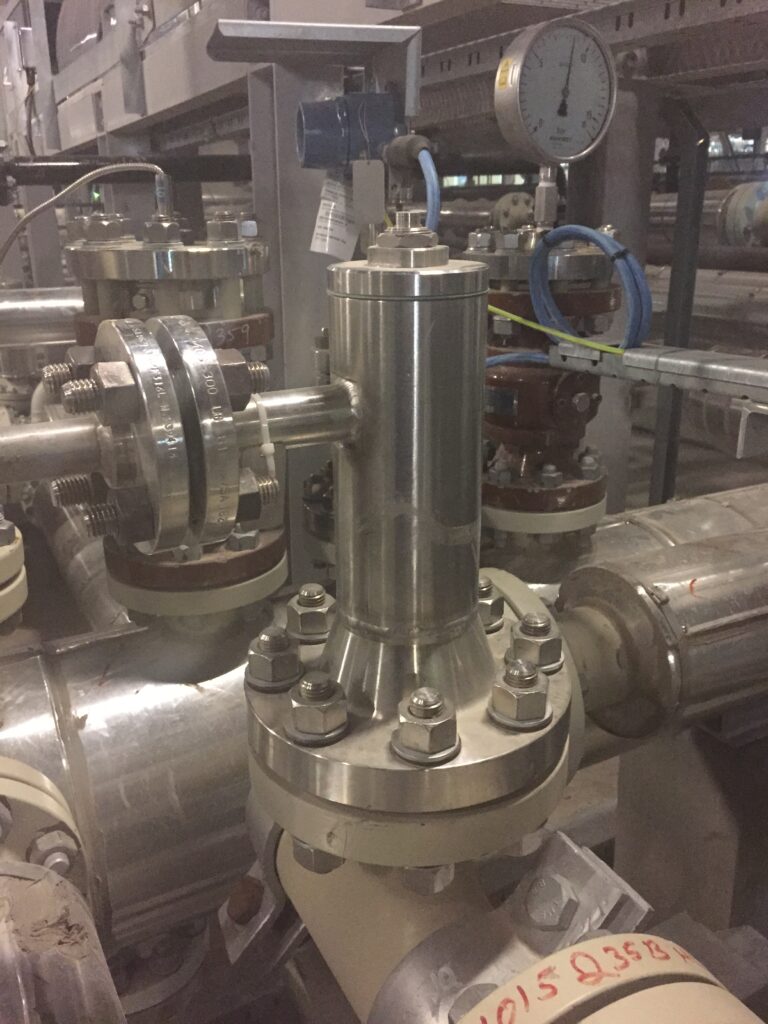
Injection quill
SKU AH-EC-1007
Introduces a chemical or water stream into the process line ahead of an electrostatic coalescer, prewash coalescer or desalter mixing valve: demulsifier or wash…
-
Bushings & insulators
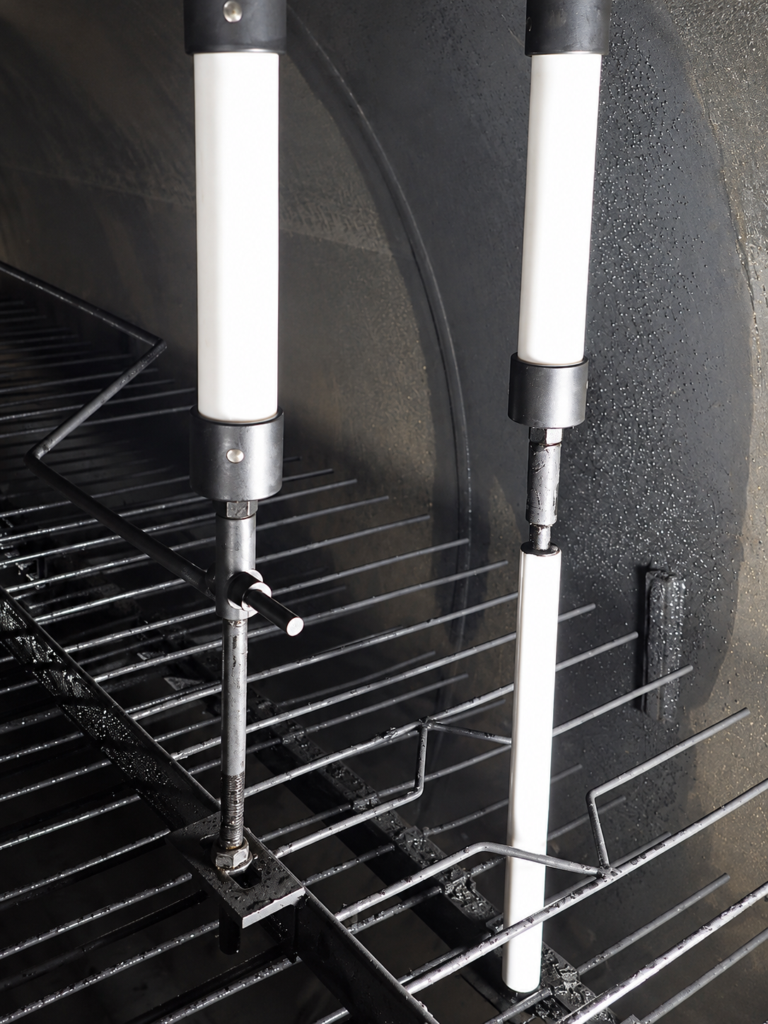
Insulating sleeve
SKU AH-EC-1005
Insulates the high-voltage conductor where it passes close to earthed metal, such as the vessel nozzle or internal supports, inside a desalter or dehydrator.…
-
Instrumentation & controls
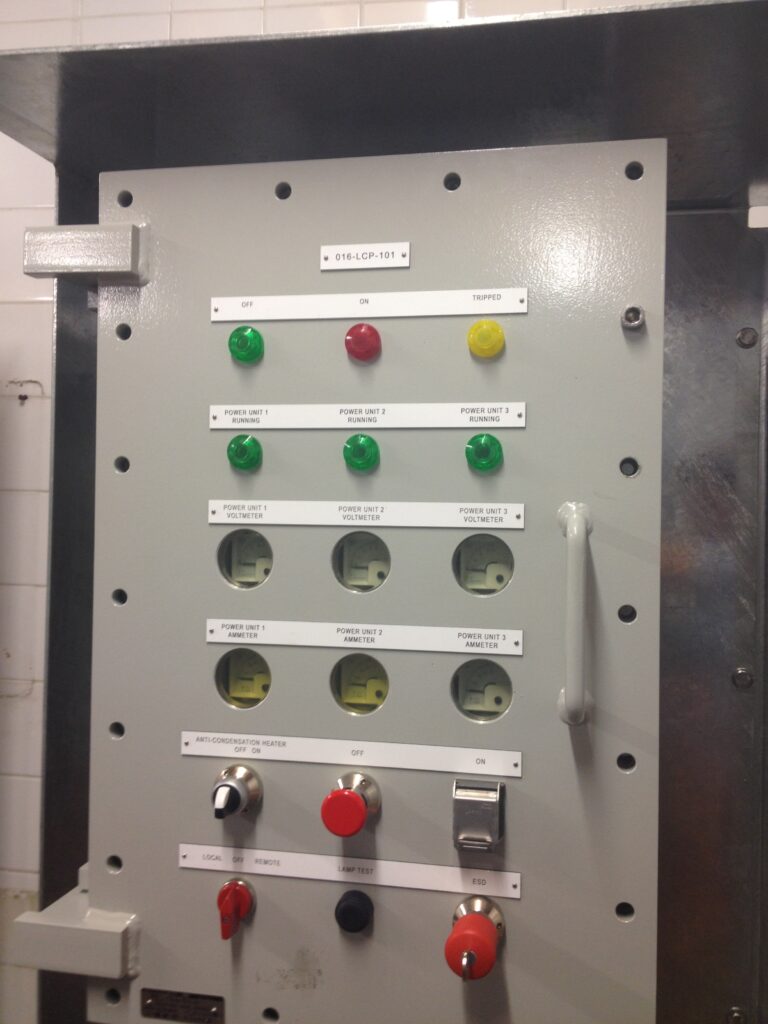
Local control panel spares
SKU AH-EC-1008
Replacement components for the local control panel that supplies and protects the power unit of an electrostatic coalescer, desalter, dehydrator or prewash coalescer: the…
-
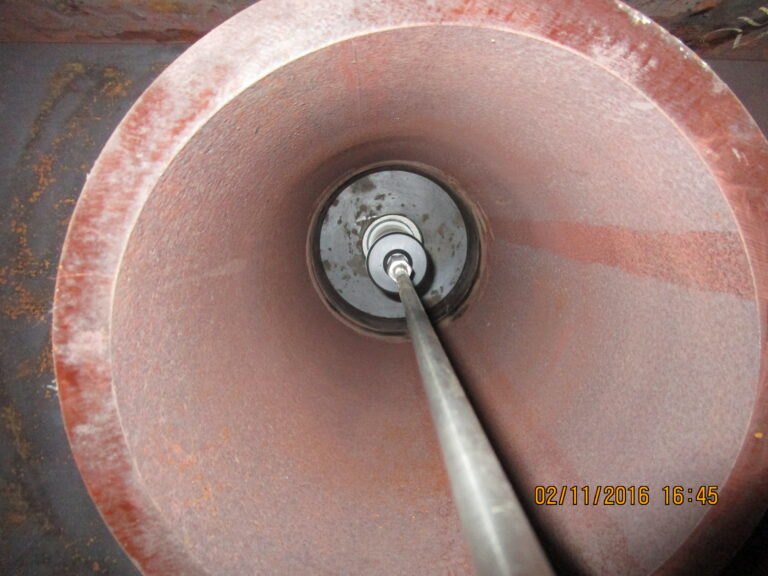
Electrodes & internals
Power connecting rod
SKU AH-EC-1004
Connects the conductor of the entrance bushing to the energised electrode grid inside a desalter or dehydrator, carrying the high-voltage supply through the oil…
-
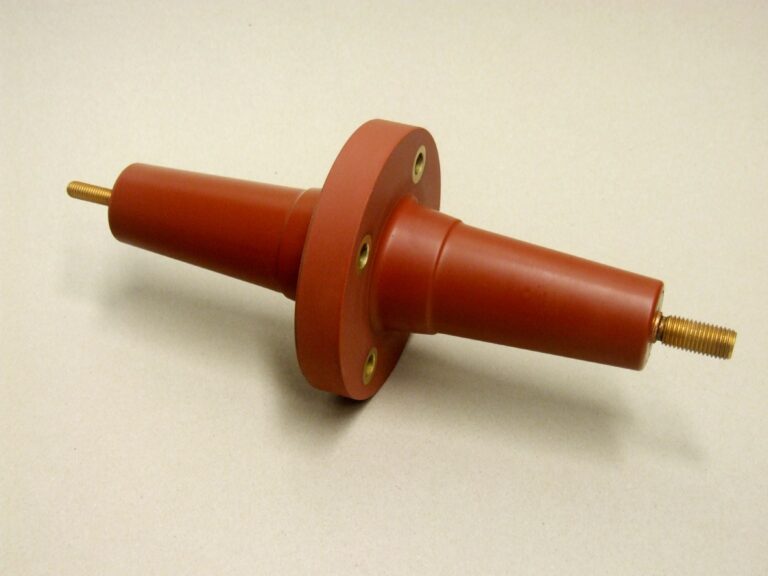
Transformers & power units
Transformer bushing and power supply bushing
SKU AH-EC-1006
Carries the high-voltage output of a desalter, dehydrator or prewash coalescer transformer or power unit out of the transformer tank and into the conduit…
Add to enquiry: Transformer bushing and power supply bushing